Comprehensive Coating Inspection & Quality Testing
Independent inspector with advanced equipment, providing specialized inspection, assessment, and detailed reporting for all industrial coating service conditions. Delivering expert services across industrial, high-performance, protective, and marine coating sectors, including powder coatings, galvanizing, passive fire protection (PFP) systems, tank linings, pipeline coating systems, field joint coatings, concrete coatings, intumescent and insulation coatings, thermal and heat-resistant coating systems, as well as maintenance and restoration of existing assets
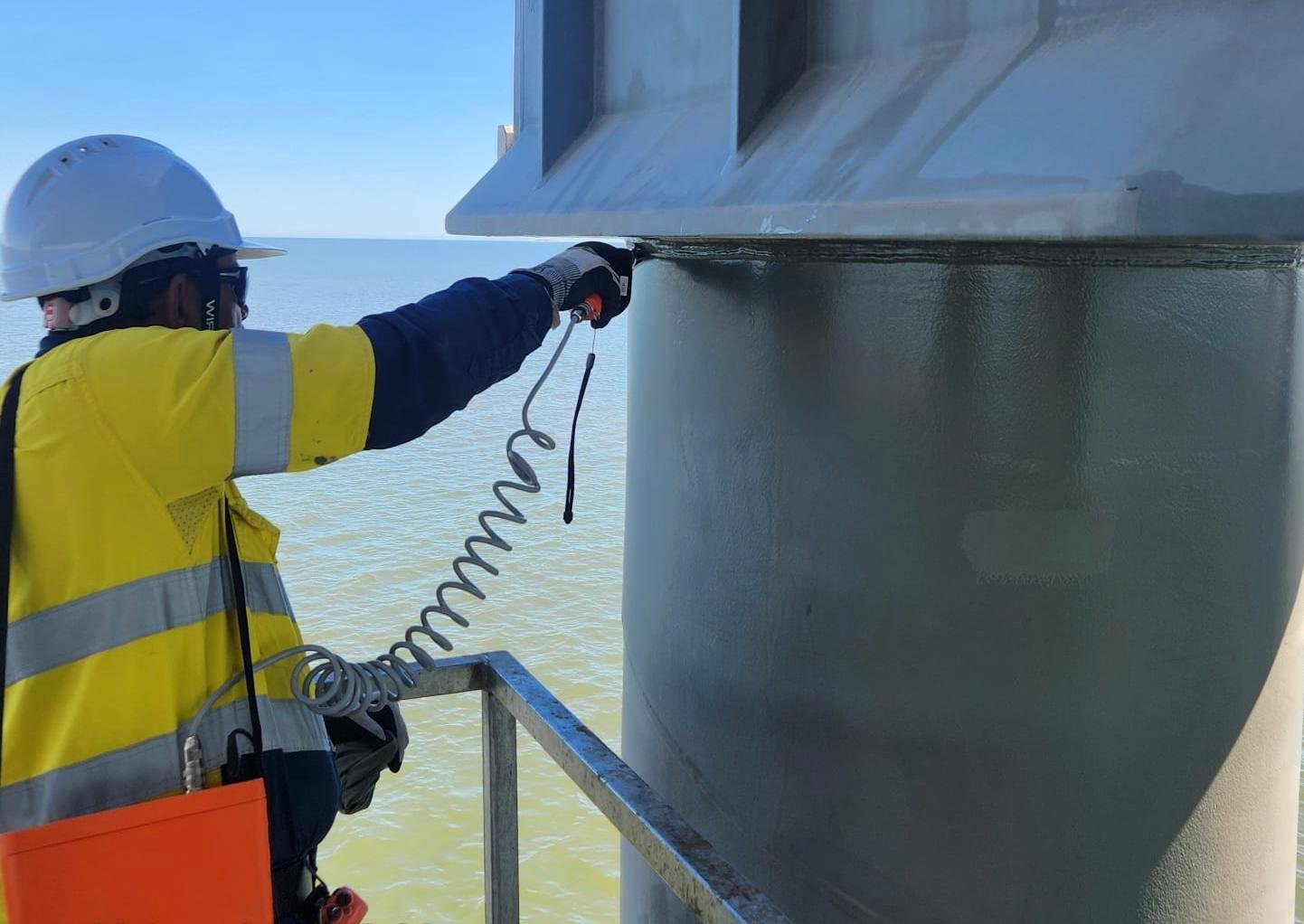
Key services
- Surface condition assessment, substrate evaluation, and pre-cleaning inspections.
- Inspection and verification of blasting unit or equipment setups and surface preparation methods.
- Inspection of wet & dry abrasive blast-cleaned, power tool–cleaned, and hand tool–cleaned surface prior to paint application.
- Visual inspections and surface roughness & profile assessments using ISO comparators, replica tapes and surface profile gauges.
- Surface cleanliness – visual checks and quality testing including surface dust and salt/conductivity tests.
- Environmental and ambient condition inspections including surface temperature, humidity, dew point, and atmospheric dust levels.
- Review of project specifications, coating procedures, ITPs, and application requirements.
- On-site quality supervision and compliance monitoring during coating application as per project/client requirements.
- Technical support and clarifications on coating products including Technical Data Sheet & Safety Data Sheet interpretation.
- Verification and practical guidance on product storage, shelf life, product mixing, thinning, induction time, and pot life.
- Basic support and guidance on application equipment – airless, conventional, plural-component spray machines, and manual application methods.
- Wet Film Thickness (WFT) checks, curing process, and coating system monitoring.
- Continuous assessment of environmental and ambient conditions during the application and curing cycle of coating using dew point meters.
- Visual inspections and assessment of appearance, uniformity, opacity, coverage and quality of applied coating surfaces.
- Curing / drying verification and hardness tests on coating using industry standards and advanced instruments.
- Inspection and identification of coating defects with rectification procedures and technical recommendations.
- Dry Film Thickness (DFT) measurements and porosity/pinhole testing (high- and low-voltage holiday tests) using advanced inspection equipment.
- Adhesion test – tape test methods and pull-off testing using portable adhesion testers.
- Preparation of detailed inspection and quality testing reports with clear findings, supporting evidence, and timely submission to meet project and client requirements.
- Preparation and compilation of project quality lots and final MDRs, including full review, verification, and compliance checks to ensure all documentation meets project and client requirements.
Frequently Asked Questions
What types of surfaces and substrates can you inspect?
InspaTec inspects a wide range of metallic and non-metallic substrates, including structural steel, tanks, pipelines, marine assets, and industrial equipment, focusing on surface condition and coating performance before and after application.
Do you check surface preparation before coating is applied?
Yes, the team inspects surface preparation methods such as abrasive blasting, power tool cleaning, and hand tool cleaning, verifying cleanliness, surface profile, and readiness for coating in line with relevant standards
How do you verify environmental conditions during coating application?
Inspectors monitor and record parameters like surface temperature, relative humidity, dew point, and ambient dust levels using calibrated instruments to ensure they meet specification requirements throughout the application and curing period.
Can you detect and report coating defects after application?
Yes, InspaTec identifies defects such as thickness issues, pinholes, porosity, runs, sags, Opacity issues, or insufficient film build and provides rectification recommendations tied to project specifications and industry best practices.
What kind of inspection reports will we receive?
Clients receive structured inspection and quality testing reports that include measured values (WFT/DFT, profile, salts, holiday, adhesion), environmental records, photographic evidence, non-conformance details, and confirmation of compliance with project specifications.